Saturday, February 1, 2020

Personal Wellness Instructor


Lose weight, Gain weight, or maintain healthy active lifestyle!!
Call / SMS / WhatsApp us for an appointment:

 +6012 615 9165 / +6012 640 9165

Email: waichon1985@gmail.com / rachelng307@gmail.com 

Monday, January 12, 2015

Let’s talk about...Arginine

Arginine is an amino acid, or building block of protein, that is both produced by the body and ingested through food and supplements.

In 1998, Dr. Louis Ignarro received the Nobel* in Medicine for his research discoveries revealing the cardiovascular benefits of nitric oxide (NO), a gas made by the cells lining the tiniest blood vessels in the body.

The amino acid Arginine, which is consumed as part of a typical diet, fuels the production of Nitric Oxide in the walls of tiny blood vessels, for vascular and circulatory health support.

Arginine may also help enhance blood flow to the heart. It helps maintain healthy blood vessel tone for improved circulation.

This important amino acid is found in a wide variety of foods, including animal sources, such as dairy products, beef, poultry and seafood; as well as plant sources, like nuts, seeds (pumpkin, sesame and sunflower), chick peas and cooked soybeans.

The minimal amount of supplemental Arginine used to support cardiovascular health is 5g per day.

Key Facts
• Is needed to produce Nitric Oxide (NO), a naturally-occurring compound important in many physiological and cellular processes
• Supports heart, vascular and circulatory health

Key Benefits
• Supports NO production for vascular and circulatory health
• May help enhance blood flow to the heart

Niteworks, L-arginine

* The Nobel Foundation has no affiliation with Herbalife and does not review, approve or endorse
 Herbalife® products

Saturday, January 10, 2015

BE HAPPIER: 4 REASONS TO GET ACTIVE

There are hundreds of reasons why being active is beneficial. Exercise is good for your body, your mind and for your social life.


Here are four reasons I believe will inspire you to get up and get healthy. Once you’ve read through, I know you’ll join me and become a happier, healthier you.

Reduced stress
Most of our lives are filled with stress - lack of time, financial struggles, difficult work deadlines, simply trying to herd your children to school, etc.

Stress can lead to weight gain and make losing weight more difficult, so finding time for activity has never been so important. Stress also often causes over-eating, which can lead to weight gain. This, in turn, increases your stress, and the cycle repeats itself.

Even I have succumbed to stress and hidden out in my pantry (where I keep the cookies!) during times of high pressure. Knowing that this wasn’t the best reaction, I took time out and realised that I needed to do something that would help me cope with the stresses of my life.

I found that adding an activity to my day allowed me to re-group and focus on myself and this helped me to reduce anxiety and stress.

Feel more productive in work and life I always used to think that in school we had recess to give the teacher five minutes of peace but the real reason is much more interesting. Studies have found that after activity our brains are more active and this makes it easier for us to learn and retain information.
(I’ve tested this philosophy on my own children and it definitely works for them.)

You may not be in school any more, but taking a brief recess for activity, especially when you feel drained, may improve your focus and make you more productive. Feeling that you’re more productive is a great way to beat stress!

A positive lifestyle attracts positive people
When you make a conscious effort to improve yourself through becoming more active, your confidence also gets a boost. Even better, your new positive approach can convince those around
you to also make a positive change. This is especially true if you decide to take a class or join a fit club.

Who knew that by improving yourself you¹d have the potential to improve others too?

Increase your happiness
Who doesn’t want to be happier? Being active promotes the release of endorphins in your body similar to those that are released when we eat foods such as chocolate. I’d much rather get my happy endorphins from activity because it's long lasting.

When you eat unbalanced sugary delights, your happy vibe is short lived and is quickly followed by a not-so happy energy drop.

What goes up must come down and if you constantly spike your blood sugar in this way, you¹ll find it hard to balance your mood. Instead, try involving yourself in a healthy activity. You’ll have more energy, your mood will be stable, and this will make you happier!

Activity really is good for everyone!
Think of these four life-changing benefits of exercise as routes to happiness. Less stress makes you happier, being alert and more productive makes you happier and happy people attract other positive, happy people.

Happily, I think that promoting an active lifestyle will eventually make the world happier, healthier.

Written by, Samantha Clayton
AFAA, ISSA. Samantha is Director of
Fitness Education at Herbalife.

Friday, January 9, 2015

Let’s talk about...Fibre

Dietary fibre, also known as roughage or bulk, includes all parts of plant foods that your body cannot digest or absorb.

Dietary fibre has many different functions and activities, such as delaying or increasing the speed of food moving through the gastrointestinal system or influencing the microbial activity in the large intestine.

The functions and activities of dietary fibre depend on physical and chemical properties of dietary fibre, which include solubility, fermentability, viscosity and waterholding capacity.

Dietary sources of fibre include fruits and vegetables, beans, peas and other legumes, as well as nuts, seeds and whole-grains products like oats and brown rice.

Fibre promotes a sense of overall well-being by maintaining healthy digestion, promoting regularity, improving nutrient absorption and supporting the growth of friendly bacteria in the colon.

The recommended dosage of dietary fiber is 25g for women and 38g for men. However, the average
American consumes only 14g of dietary fibre daily, well below the recommended dosage.

When reading the label, keep in mind “good source” means at least 3g of fibre per serving, while “excellent source” means at least 5g of fibre per serving.

Meeting the daily recommended intake of fibre can best be achieved by eating a variety of whole grains, fruits and vegetables. Other foods and dietary supplements that contain fibre can also be a healthy way to achieve the daily amount.

Key Facts
• Essential to human diet
• Indigestible parts of plant foods
• Recommended daily intake is 25g to 38g
• Fibre content of food may change when processed, so eat fresh foods whenever possible and eat the peel

Key Benefits
• Promotes a sense of overall well-being by maintaining healthy digestion
• Promotes regularity
• Improves nutrient absorption
• Supports the growth of friendly bacteria in the colon

Tuesday, January 6, 2015

Better Nutrition for the Greater Good -- Luigi Gratton, M.D., M.P.H.

Nutrition is key to public health. And as a practicing physician of the Center for Human Nutrition in the Risk Factor Obesity Program at the University of California, Los Angeles (UCLA)*, Luigi Gratton, M.D., M.P.H., sees the consequences of poor eating habits and lack of exercise.

luihi gratton, herbalife

Gratton became concerned about public health during his master’s studies. “I was drawn to public health by people who loved what they did. And I realized that keeping the public healthy meant emphasis on nutrition and exercise,” he says. As Vice President of Worldwide Product Marketing at Herbalife, Gratton believes that developing simple nutrition solutions that make it easier for people to get the right balance of nutrients needed on a daily basis can help millions of people live better lives.

Before joining Worldwide Product Marketing, Gratton spent several years as Vice President of Medical Affairs and Nutrition Education and worked closely with Herbalife Independent Distributors at training events to provide them with the information they needed to better serve the needs and concerns of their customers. “I liked the public health angle of the role,” he says. “Teaching the principles of nutrition to independent Distributors is very powerful because it enables us to spread information about good nutrition through a network that reaches millions of people. And that’s true public health.”

As Herbalife continues to refine its product catalog, Gratton helps ensure that Herbalife® products are developed with a science-based approach to nutrition. And his experience and knowledge gained from working with independent Distributors around the world will be invaluable to him and his team as they develop new products.

Interesting Facts
• Awarded Diplomat of The American Board of Family Practice and The American Board of Physician Nutrition.
• Earned his degree in family medicine from Mount Sinai Medical School of New York University and fulfilled his residency in family medicine at Los Angeles County Hubert Humphrey Family Medicine.
• Ran track in high school and in college while earning his undergraduate degree from UCLA*
* The University of California does not endorse specific products or services as a matter of policy.

Saturday, January 3, 2015

Free Fitness: 3 Ways to Find A Free Workout

Are you on a tight budget but still looking to get fit? If the answer is yes, then I have a few free fitness solutions for you!

Often, people are unaware of the free fitness opportunities in their neighborhood. With a little investigation, you’ll find fitness freebies that are a little more exciting than a jog around the park
– not that there’s anything wrong with a simple jog!

You shouldn’t let a lack of budget get in the way of your fitness goals. With a little creativity, there are many ways to get a low-budget or free workout. All you need to do is keep your eye on the prize and make it happen!


Top places to find free fitness

Free Fitness At Work
Many workplaces are investing in employee well-being and now offer wellness programs. After all, it’s better to have a staff that stays happy and healthy year-round. If you’re unsure about what your workplace offers in terms of a wellness program, contact your Human Resources Department – you may be pleasantly surprised as many companies offer to reimburse some or all of local gym membership costs. 

Alternatively, if you can round up a group of like-minded colleagues, then you can probably negotiate a bulk discount at a local gym – try reaching out to your HR
team for help.

Some companies even offer a gym on the company premises. If you are lucky enough to work for a company that offers a fitness facility at the workplace, then there is your key to free fitness! Some common excuses for not using a company gym are not wanting to sweat in the office, not wanting to exercise in front of colleagues, and lack of time.

Though I admit that there are times when I hate messing up my hair from workouts, I believe my health goals must come before vanity. In addition, using the gym at work is convenient, saves time and most of all: saves money!

Free Fitness In Your Community
There are many places in local communities that offer low-budget or free fitness activities. You just have to take the time to search for these activities. Check out local websites, community colleges, or your local park and you may be pleasantly surprised to find free or low-cost fitness classes, boot-camps and dance classes.

Many local parks now have free outdoor fitness equipment for the public to use. These can be a great way to break up a walk or jog, and add in some strength and toning exercises. I recommend finding a fitness buddy who can accompany you on a daily outing. And, remember that catching up with friends over a nice long walk is a healthier and cheaper alternative to catching up over
coffee and cake!

With a little investigation, you can easily find a few free fitness options in order to reach your fitness goals while on a budget. I’m very excited to save some money and give some of my local fitness
options a try this year.

Free Fitness With Technology
If you want to work out in the comfort of your own home, you’re in luck because current technology is amazing! Long gone are the days when you had to collect numerous VHS tapes or DVDs that get boring after only a few plays.

Now you can simply log on to your computer or use your smartphone and work out for free. There are lots of options to choose from with mobile apps and websites where you can track your calorie count, plan your meals and monitor your exercise minutes.

Or you may visit my FACEBOOK page for more information and schedule of  my FREE workouts: 
https://www.facebook.com/funfitkl

Thursday, January 1, 2015

How to Eat Less Without Noticing

January is all about resolutions and “turning over a new leaf”. So this month, we’re talking about the big nutritional benefits you can get from making just a few small changes. Let’s take a look at ways you can start to eat less without leaving your tummy grumbling.

When you have taken the time to shop smart and cook healthfully, it’s easy to assume that how much
you eat doesn’t really matter that much. But I see so many people in my practice who eat really, really well – they just eat way too much. So controlling your portions does matter – even when your plate is filled with ‘healthy’ foods – if you’re trying to keep your calories in check.

The idea that “your eyes are bigger than your stomach” really applies here. When you’re loading up your plate, you’re relying on what you see to determine your portion… and that is often a lot more than you can – or should – eat. And we’re programmed to finish whatever is put in front of us – whether it’s a lot or a little. That’s your ‘portion’. And the only way you know that you’re finished eating is when the empty plate tells you, “I’m done”.

My ideas to help you eat less
Since the amount of food you’re likely to eat is usually determined by how much food is actually in your bowl or on your plate, it makes sense to step back and look at how your food is served, because it can greatly influence how much you eat.

Size of the serving container
Serve yourself anything – from soup to nuts – from a large container, and you’ll allot yourself more than if you’d parceled out your portion from a smaller box or saucepan. And the difference isn’t small – we serve ourselves up to 45% more food when the package we’re serving from doubles in size!

Size of the utensils
You’ll serve yourself more if you use a large serving spoon than you will from a smaller one, so be aware of how much you’re putting on your plate. “Just a couple of scoops” of anything can add up really fast when the scoop is the size of a shovel.

Size of the plate
When you use a smaller plate, it looks as if it holds more food – which means your eyes are telling you that this plate of food will be more filling. So if you’re trying to cut calories by cutting portion sizes, trim the size of your plate, too.

Height and width of drinking glasses
If you’re trying to curb your intake of liquid calories, consider the size and shape of the glass you use. Tall skinny glasses appear to hold much more than short, wide ones – which fools your eyes into thinking that your stomach will be getting more.

Plating up in the kitchen instead of at the table
Serving food family style makes it easy for everyone to help themselves … which is precisely why it’s not such a good idea if you’re trying to control portions. With serving dishes on the table, it’s just too easy to have “just another spoonful”. Instead, portion out your meal in the kitchen. The only serving dishes you should keep on the table are those holding low-calorie veggies and salads.

Plate color
I’m not suggesting that you go out and buy new plates, but keep in mind that the color of your plate can affect your ability to visualize how much you’re eating. When there’s a large contrast between the color of the food and the color of the plate – picture a dark square of chocolate cake on a bright white plate – it’s easier to visualize the portion, which makes it easier to control how much you are eating.

Finally, you’re likely to eat less if you think about the foods you eat first I first wrote about how most people fill up on higher calorie foods first and it’s an interesting concept to think about. When you’re really hungry and you’re serving yourself a plate of food, you’re likely to serve yourself more of the highest calorie foods that are available – and to also dig into them first once you sit down to eat – which means you’re going fill up on those high calorie foods first, too. If this sounds like you, try digging into your salad or veggies first – that way, you’ll start to fill up with the lowest calorie items
first, which leaves less room for the heavier stuff.

Written by Susan Bowerman
MS, RD, CSSD. Susan is a paid
consultant for Herbalife

Tuesday, December 30, 2014

What to Eat After Your Workout

What you eat and drink after your workout – and when – can have a big impact on your next performance.


What do you eat first after a workout? Most athletes pay fairly good attention to what they eat before exercising, but afterwards – for some – it’s almost as if ‘anything goes”. Eating the right foods and beverages after exercise does more than just replenish your draining fuel supply – it helps your body get ready for your next round of activity too. If you work out hard regularly, what you eat, and when, can make a big difference in your overall performance.

Keep in mind that refueling is geared primarily to those doing extended and strenuous bouts of exercise. If your usual activity is a daily walk or brief swim, your regular meals and snacks should take care of your nutritional needs as long as your diet is healthy and well-balanced – but always stay on top of your fluid intake.

What To Eat And Drink After Exercise

Replenish Fluids And Salts
When you exercise, sweating causes you to lose important body salts – like sodium and potassium – that need to be replaced. Many advanced athletes get in the habit of weighing themselves before and after exercise, in order to figure out how much fluid needs to be replaced. For each kilogram of weight lost during activity, you should drink about 1 liter of liquid.

What to Drink
Water is fine as a fluid replacer, since you’ll be eating afterwards – which means you’ll pick up carbohydrate, sodium (and likely some potassium) from your foods. For those who don’t normally drink high-calorie liquids, this is the one time they might drink fruit juices, since they provide fluid, carbohydrate and, depending on the fruit, potassium too. Sports drinks are great since they provide not only fluid and carbs, but the right balance of salts that have been lost through perspiration, too. And they usually have a mildly light, sweet taste that often encourages you to drink more.

Your Body Needs Carbohydrates
After an intense workout, your body has burned through a lot of carbohydrate – the primary fuel that keeps your muscles working – and it’s important to refuel as soon as you can. The recommended amount is about 1.4 grams of carbohydrate per kilogram of body weight. That’s about 100 grams of carbohydrate for someone weighing 75 kg. Healthy carbohydrates – fruits, whole grains and the natural carbs in dairy products – are a good place to start with post-workout snacking.

Your Body Needs Protein
A bit of protein is important in recovery too, since it helps to stimulate muscle repair and growth after strenuous exercise. In most cases, about 10 grams of protein will suffice. 

The ideal post-exercise meal or snack contains a combination of healthy carbs and protein, which is why athletes often turn to foods like a sandwich on whole grain bread, a dish of yogurt and fruit, a protein shake made with milk and fruit, or specially formulated recovery beverages.

Meal Timing Matters Too
When you exercise, your muscles become very sensitive to the nutrients that are available –
and that sensitivity lasts for a limited amount of time. That’s why many athletes who want to
optimize muscle recovery pay attention to this “metabolic window” – the time period of about
30-45 minutes after exercise during which you should try to eat your carbs and protein. During this critical time after you exercise, your muscle cells are more sensitive to the effects of insulin, a hormone that helps transport amino acids (from protein) into your cells.

Insulin also works to drive carbohydrate into the cells, where it is stored in the form of glycogen. This stockpile of carbohydrate can then be used to provide energy to working muscles during the next bout of activity. And, once you kick this fuel storage process into gear, you can keep it going for up to eight hours if you continue to provide your body with a shot of carbohydrate every two hours.

Written by Susan Bowerman
MS, RD, CSSD. Susan is a paid
consultant for Herbalife

Monday, December 29, 2014

Let’s talk about... Soy Protein

herbalife soy, herbalife formula 3, herbalife formula 1
Soy protein is high-quality protein isolated from soybeans. Most of the fat and carbohydrate of the soybean has been removed, leaving a nutrient-rich and satiating protein that offers several benefits from heart health to weight management.

Soy protein is a complete plant-based protein. Similar to animal protein, it provides our bodies with the full range of essential amino acids.

This complete vegetarian protein boasts naturally-occurring phytonutrients that promote health, provide energy for daily activities and meet the amino acids needs of growing children and adults alike.

According to the U.S. Food and Drug Administration, consumption of 25 grams of soy protein per day, as part of a diet low in saturated fat and cholesterol, may reduce the risk of heart disease. Sixteen other countries have also authorized heart health claims for soy protein.

Soy protein is also a great addition to long-term weight-management programs, as it helps keep hunger at bay. It has been shown in clinical studies to support weight loss, while supporting lean body mass.

Studies show that this popular plant-based protein also supports muscle development and can help promote increased strength during resistance exercise training.

Key Facts
• High-quality plant-based protein
• Provides all essential amino acids
• Highly digestible protein

Key Benefits
• Helps build and repair body tissues
• Provides energy and stamina
• Satisfies hunger and gives a feeling of fullness
• Supports lean body mass
• Helps reduce the risk of heart disease when consumed in appropriate amounts as part of a diet
low in saturated fats and cholesterol

Friday, December 26, 2014

Cristiano Ronaldo and Herbalife Team Up for Good Nutrition

CR7

In the competitive world of professional sports, good nutrition can be a key advantage. Global sports icon and international soccer star Cristiano Ronaldo believes that it is essential. That’s why the Portuguese winger/forward is joining forces with Herbalife to promote great nutrition and regular exercise for people of all activity levels.

“I strongly believe in the importance of the right nutrition for me as an individual, both on and off the field,” says Ronaldo. “I am looking forward to working with Herbalife, as a company that shares my passion and brings such expertise and knowledge in the area of sports nutrition.”

Herbalife Chairman and Chief Executive Officer Michael O. Johnson says that teaming up with Ronaldo is a natural. Ronaldo is a leader on his team and Herbalife is a leader in global nutrition. “One of the most exciting elements of our new relationship is that we will be working with Ronaldo to develop cutting edge sports nutrition products together, which will be cobranded,” said Johnson.

Ronaldo is already working with Herbalife Senior Director of Sports Nutrition Dr. John Heiss on a comprehensive product line. As his official nutrition sponsor, Herbalife will also work with Ronaldo to optimize his own nutrition program and provide him with a range of products to support his demanding training regimen. Finally, he will team up with the Herbalife Family Foundation to develop programs that assist nutritional health and education initiatives.

Johnson says Herbalife gets positive exposure from more than 100 sponsorships of athletes, teams and sports events. “The world is wearing the Herbalife brand and it is a testament to our products that Herbalife is attracting interest from renowned athletes in Europe and around the world.”

Interesting Facts
• He was born in Funchal, Madeira, Portugal, on February 5, 1985.
• He has played for several different football clubs, including Andorinha (Portugal), Nacional (Portugal), Sporting CP (Portugal), Manchester United (England) and Real Madrid (Spain).
• In the 2010–11 season, he became the first player in La Liga to score more than 40 goals in one season. He then repeated this achievement with 46 goals in the 2011–12 season.
• From 2009–2013, he averaged more than one goal per game, making him one of the most prolific goal scorers in soccer history.

Thursday, December 25, 2014

Nobel* Laureate and Herbalife Nutrition Advisory Board Member is a Heart Health Advocate

Herbalife niteworks

Louis Ignarro, Ph.D., and Nobel* Laureate in Medicine, has a mission to educate the world about heart health. “I wanted to work with Herbalife to share the life-changing benefits of Nitric Oxide, and this enriching relationship has allowed me to spread the good news about endothelial wellness and heart health across the globe,”he said. A member of the Herbalife Nutrition Advisory Board (NAB) and consultant to Herbalife, Dr. Ignarro has dedicated himself to the study of Nitric Oxide. “My research experience and expertise in the field of Nitric Oxide has provided me with an incredible understanding into the function of our cardiovascular system. It is this knowledge that has helped me to propose nutritional solutions for the support of heart health, especially with respect to the production of Nitric Oxide.

Since reaching an agreement with Herbalife in 2003, he has spoken to over 5 million people about Nitric Oxide and cardiovascular wellness and endorsed six cardio products, including Prepare dietary supplement, part of the Herbalife24 line. As a NAB member, he educates and trains Herbalife Independent Distributors on the principles of nutrition, physical activity and a healthy, active life.
Dr. Ignarro thinks that a positive culture sets Herbalife apart. “The passion to help people lead healthy lives that is exhibited by the Distributors and the executive team at Herbalife makes it unique. It is that passion for health and wellness that originally attracted me to Herbalife.” 

herbalife 24

In his own fitness routine, Dr. Ignarro likes to mix things up for maximum effect. “Although I love marathons, I’ve replaced my daily runs with an average of 30–40 miles on my bike each day. I love riding because it’s time I spend with my wife, Sharon. When I don’t ride, I hit the gym and either run on the treadmill or complete a spin class and lift weights.”

Interesting Facts:
• Has a Ph.D. in pharmacology and is a distinguished professor of pharmacology at the University of California, Los Angeles†
• In 1998, he won the Nobel* in Medicine, along with two other researchers, for his discoveries showing the powerful ability of Nitric Oxide to support energy and vascular and circulatory health
• Author of the best-selling book “NO More Heart Disease,” which is based on his research into Nitric Oxide

*The Nobel Foundation has no affiliation with Herbalife and does not review, approve or endorse Herbalife® products.
†Titles are for identification purposes only. The University of California does not endorse specific products or services as a matter of policy.

Tuesday, December 23, 2014

Let’s talk about...Aloe

Aloe vera is a species of succulent plant that originated in North Africa and has been used for over 2,000 years for the treatment of a wide range of external and internal conditions.


Today aloe plants are grown in tropical and sub-tropical regions, including Mexico, China and parts of Asia.

Although valued for its soothing and moisturizing effects on the skin, aloe also delivers benefits inside the body. Most notably, aloe is used to promote a healthy digestive system, the process by which food and liquid are broken down into small molecules that the body can use to build and nourish cells and provide them with energy.

This impressive plant supports nutrient absorption, thereby enabling our bodies to take full advantage of the various nutrients we consume. Aloe also offers antioxidant support, which helps to protect cells and reduce free radical tissue damage by preventing the formation of radicals.

Aloe vera has also been used traditionally to soothe the stomach from occasional discomforts, such as indigestion and upset stomach.

Although commonly an ingredient in topical lotions and gels, aloe vera is also incorporated into many food products, including beverages and teas, thanks to its many digestive health benefits.

Key Facts
• The main chemical constituents in aloe are polysaccharides, of which the main compound is Acemannose
• Aloe vera enhances absorption of Vitamins C and E

Key Benefits
• Supports healthy digestion
• Contributes to good intestinal health
• Aids in nutrient absorption
• Provides antioxidant activity


Monday, December 22, 2014

What Is The Glycemic Index And How It Can Help You Choose A Healthy Diet

GI index, Glycemic Index, Healthy diet
The Glycemic Index measures the effects of carbohydrate-containing foods on sugar levels in your bloodstream. Whenever you eat and digest carbohydrate-rich foods – foods like fruits, vegetables, grains and sweets – the end result is a rise in your blood sugar (your blood glucose). This sugar in your blood is important as it is the primary fuel for your brain and muscles and is, in large part, what keeps you going mentally and physically throughout your day.

However, not all carbohydrate-containing foods cause your blood sugar to rise to the same degree and this is where the Glycemic Index (or GI) comes in. The GI ranks foods according to how much, and how rapidly, they cause the blood sugar to rise after they’re eaten.

How was the Glycemic Index established?
The first paper on Glycemic Index was published over 30 years ago1 , in which a small group of healthy people were used to establish the index. The volunteers were fed each of the 62 foods in whatever amount was necessary to supply 50 grams of carbohydrate (which varies a lot from food to food – it takes about 60 baby carrots but a mere handful of cooked white rice), and their blood sugar
measurements were then taken several times over a 2-hour period. The effect of each food on blood sugar was compared to the effect of 50 grams of pure glucose (the form of sugar in your bloodstream), which was given a value of 100. So, foods that caused the blood sugar to rise quickly and steeply had a number closer to 100, while foods that caused a less dramatic rise in sugar had a lower GI.


Which foods have the highest Glycemic Index?

The highest GI foods are those that are low in fiber, but starchy or sugary – foods like white bread, sweet breakfast cereals, noodles, fruit juices and white rice. Since they are digested and absorbed relatively quickly, these high Glycemic Index foods tend to cause fairly large and rapid rises in blood sugar.

While we do need sugar in the blood to fuel our activities, such large surges are unnecessary, and ultimately, unhealthy. That’s because a quick spike in your blood sugar is often followed by a steep drop – and suddenly you’re craving something sugary to boost your blood sugar levels back up. And then, the cycle starts all over again. If you wind up snacking on sugary foods all day long, there’s
a good chance you’ll take in more calories than you need - which will be put into storage on your belly and thighs.

Which foods have a low Glycemic Index?
On the other hand, the lowest GI foods are those carbohydrate-rich foods that are whole and unprocessed. Vegetables, whole fruits, beans, and most 100% whole grain foods – like brown rice, rolled oats, barley, quinoa and 100% whole grain bread have relatively low Glycemic Index rankings. That’s because they’re high in fiber, which means they take longer to digest, and so your blood sugar
rises more gently after you eat them.

Rather than a big spike in blood sugar, these wholesome foods lead to a slower release into your bloodstream, which provides you with more sustained energy. And, thanks to their high-fiber content, they’re more filling too. Therefore, a diet that emphasizes low GI foods can be a good strategy for weight control.

What really matters: the total carbohydrate load of your diet
If you use the GI as a guide to choosing what to eat, it can steer you towards foods that are less “carb heavy” – like whole grains and veggies – with fewer calories per bite. But you should know that this isn’t always the case. Some foods (like ice cream) have a low Glycemic Index because their high fat content slows digestion – which means they don’t cause a big spike in blood sugar after they’re eaten. On the basis of GI alone, you might conclude that ice cream was a good thing to include in your “low GI” diet.

On the other hand, some healthy foods have a high Glycemic Index value which can be a bit misleading if you don’t consider portion size. Take watermelon for example. You’d need
to eat 5 servings of watermelon to get the 50 grams of carbohydrate needed to determine the GI. But a typical serving doesn’t contain nearly that much – and doesn’t contribute much to the overall carbohydrate load of your diet. If you were to focus on GI values alone, you might end up omitting some healthy fruits unnecessarily.

That’s why it’s better to look at the Glycemic Index of your diet as a whole, rather than
getting hung up on individual foods.

Adjusting the Glycemic Index of your diet
To cut back on your high GI foods and reduce the carbohydrate load of your diet overall, here are some switches you can easily make. Instead of white rice and potatoes, switch to brown rice or other whole grains like cracked wheat, barley, millet or quinoa – or substitute with beans, lentils or sweet potatoes. Rather than drinking a lot of calories from high Glycemic Index fruit juices, eat whole fresh
fruits instead – have berries on cereal, or a whole piece of fruit for a snack or dessert. Switch from refined white breads, crackers and snack foods to products that are made with 100% whole grain – or try nuts instead of chips for snacks.

Whole and lightly processed low GI foods are more bulky and filling than their refined cousins, which means they retain their natural vitamins, minerals and healthy antioxidant phytonutrients, too. And that means that you get more nutrition for your calories. By swapping out the high Glycemic Index foods and replacing with more low GI items, you can greatly reduce the overall carbohydrate
load of your diet – which can help you with calorie control while providing a healthy nutrient boost, too.


Written by Susan Bowerman
MS, RD, CSSD. Susan is a paid
consultant for Herbalife.
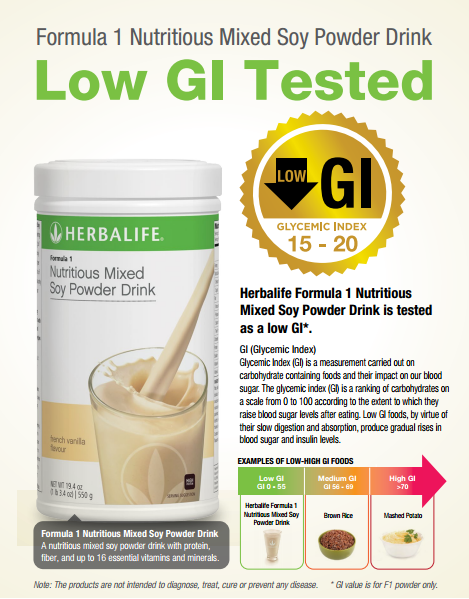
Herbalife Formula 1, low GI tested
Herbalife Formula 1 -- Low GI tested

Tuesday, September 16, 2014

Stay Healthy and Active

Live your healthy active lifestyle


At Herbalife, our Healthy Active Lifestyle philosophy is about inspiring you to take the leap to become your best self. We want to make people feel good and help them build a strong sense of self. We want to create a positive community that supports and empowers everyone, no matter what their fitness level or goals are.

People often shy away when they hear the term ‘healthy active lifestyle’ as they imagine having to dedicate hours to extreme workouts. While that certainly counts, a healthy active lifestyle is simply one that contributes positively to your physical and mental well being. It is not as hard as it sounds. Small changes to your daily life and diet can add up to big results in the long term.

Whether you are already fit or just starting out on your fitness journey, you can live a healthier and more active lifestyle.

THE RIGHT NUTRITION MATTERS

Eating right is an essential component of a healthy active lifestyle. The food we eat provides us with all the energy we need to survive.

The right diet should include adequate high quality protein, healthy fats and oils and the right carbohydrates from fruits and vegetables, which bring along vitamins, minerals and antioxidants.

KEEPING ACTIVE

Whatever your starting weight, shape or fitness level, there are physical activities that will be suitable for you and will help you in the direction of living a healthy active lifestyle. Here are 4 pillars of healthy active lifestyles you can maintain to stay fit and healthy in your daily lives.

Easy

Start with small changes to your daily life and introduce more easy, low-intensity physical activities into your day. You can walk or cycle instead of driving or taking public transport, use a stationary bicycle or treadmill while watching TV, or take up yoga, aerobic, pilates or dance classes.


Fast

Once you are comfortable with easy physical activities, challenge yourself take it up another notch with higher intensity workouts like jogging, running, tennis, swimming or cycling.


Strong

In addition to maintaining your cardiovascular fitness, there are other activities that will focus on helping you strengthen your muscles and body. Get involved in high-intensity sports like triathlons, weights and circuit training, or try training for a full marathon!


Powerful

Just like the rest of us, professional athletes are confronted with challenges every day – self-doubt, dread, pressure, etc. How do they overcome these to put up the stellar athletic performances that keep the rest of us in awe?


The secret lies in not just training your body, but your mind as well. Learn to develop the mindset of a champion to help you overcome your own personal challenges – dig deep within yourself to do better each time and learn to face your obstacles with a never-give-up attitude.

Information from Herbalife-Hub, June 2014

Saturday, September 13, 2014

Five butt-lifting lunges without the boredom

Lunges effectively work all the muscles in the lower body – especially those in your backside. Using lunge techniques for toned glutes is age-old, but need not be boring. Keeping a straight back and chest high, try these five effective lunges, holding each for 3 seconds.

Lunges, Samantha clayton, Herbalife healthy active lifestyle

Thursday, September 11, 2014

Can your metabolic rate make you gain or lose weight?

When patients tell me their weight problems are due to a “slow metabolism”, I think they truly believe that their bodies simply burn calories at a slower pace than other people’s bodies do. In their minds, if they only they could speed up the process, their weight problems would be solved. But what is “metabolism”, exactly? And – more importantly – is there anything you can do to change it?

Herbalife TC formula, metabolic rate, gain weight, lose weight

Truths and myths about metabolism

In truth, your body weight and your metabolic rate are linked – but perhaps not in the way you might think. Simply stated, the term metabolism refers to all the chemical processes that your body undergoes every day in order to keep you alive. When your body converts the calories in your food into energy, or manufactures specialised chemicals that your cells need in order to do their job – those are metabolic processes. These processes your body performs every day – hundreds of them – make up your “metabolism”.

I can see how the term metabolic rate could confuse people. When you hear the word “rate”, you might think “speed” or “tempo” – so, it’s reasonable to assume that metabolic rate can only mean how fast (or slow) your body performs its work.

In reality, though, your metabolic rate (or, more accurately, your resting metabolic rate) refers to the number of calories you burn during a 24- hour period just to keep your body’s most basic processes going – processes like pumping blood, or breathing. Of course, this isn’t all the calories you burn in a day, but your resting metabolic rate accounts for a sizeable chunk – about 75% of total calories you use up every day are used simply to keep your body ticking.

What factors influence metabolic rate?

Some people’s bodies use up more calories to perform these basic metabolic processes than others (you might think they have a “fast” metabolism). And for those who seem to require very few calories, you might think their metabolism is “slow”. But now that you know that your metabolic rate isn’t really about how quickly you burn calories – it’s really the number of calories you burn each day – you can’t technically make your body burn calories any faster.

But, let’s look at what affects your metabolic rate in the first place – it will give you a better sense for what you can and can’t do to change it.

Your body size

Larger people have higher metabolic rates than smaller people do, and this is due largely to the simple fact that they just have more cells – each of which is doing some metabolic work. That’s one reason that men usually have higher metabolic rates then women – they just tend to have bigger bodies overall.

Your body composition

A very important factor in determining your metabolic rate is your lean body mass. Imagine that your body is divided into two parts: one part is your fat, and the other part is your lean body mass (everything else that isn’t fat, like bone, fluids, organs and muscles).

This lean body mass determines your metabolic rate because every pound of lean mass you have burns about 14 calories per day (or about 30 calories per kilogram) – while a pound of fat only uses up about two. Muscle cells have a lot more machinery that converts calories into energy than your fat cells do, so it makes sense that as your muscle mass increases, so would your metabolic rate.

Your age

As you age, there is a tendency to lose some muscle mass. Natural hormonal changes contribute to some loss of muscle mass. Furthermore, the muscle damage that results from everyday wear and tear isn’t repaired quite as quickly as you age – and that can contribute to some muscle loss, too. With fewer muscle cells overall, you can’t help but burn fewer calories over the course of the day.

Your gender

Men have higher rates than women do for two simple reasons. They tend to be larger overall, and they tend to have more muscle mass than women do.

Cutting your calorie intake too much

It’s true that when you cut your calorie intake too much, your metabolic rate can take a dip. This makes sense if you think about it – your body is just trying to do the same metabolic work with fewer calories in order to keep you alive. But, in general, these decreases are relatively small, especially if you make modest – rather than dramatic – decreases in your calorie intake as you attempt to lose weight.

So, what can I do to boost my metabolic rate?

Now that you know what factors affect your metabolic rate, what can you do about it?

• Eat enough protein

Your body uses the protein you eat to build and repair muscle tissue. If you don’t consume enough protein in your diet, your body simply doesn’t have the raw materials it needs to manufacture and repair your muscle cells.

• Build muscle mass

This is probably one of the most important things you can do, since building muscle will increase the amount of lean body mass you have – which increases your overall resting metabolic rate. And, don’t think strength training is only for the younger set – with the right diet and proper exercise, your body is capable of building muscle at any age.

• Increase your daily activity

Any activity burns calories, but that, in itself, doesn’t affect your metabolic rate. But, when you exercise, you are using your muscles to move your body – and that helps to preserve your lean body mass.
And, bumping up your activity can also help to offset any dips in your metabolic rate as a result of cutting your calorie intake.

Susan Bowerman


Written by Susan Bowerman
MS, RD, CSSD. Susan is a paid consultant for Herbalife.

Wednesday, September 10, 2014

Keep Your Heart Healthy at Any Age

Even if it’s not something we look forward to, aging is inevitable. As the years come and go, signs of aging appear. With time, everyone will notice a few gray hairs and wrinkles revealing their age when they look in the mirror.

It should come as no surprise that for all the external signs of aging we undergo, we’re actually aging internally too. You may have already noticed creakier bones, worsening vision, and achy joints, but you may not have noticed the changes to your cardiovascular system.

One of the most important organs in the cardiovascular system is the endothelium, which lines your blood vessels and produces Nitric Oxide. As the endothelium ages, Nitric Oxide production naturally declines. This decrease is completely normal, but since healthy Nitric Oxide production maintains blood flow to your vital organs, it makes sense to do everything you can to make sure your endothelium is as healthy as possible.

The great thing about cardiovascular health is that it’s never too late to start making healthier choices – I was in my 60s when I started running marathons! By supporting the health of my endothelium and heart every day, now that I’m in my 70s I feel better than I did in my 40s.

Make the commitment to your well-being by aging as healthfully as possible. While you can’t stop or reverse the aging process, you can still look and feel great as you get older.

Keep heart healthy at old age, Herbalife Omega 3, Fish Oil, NW formula

5 easy ways to support healthy aging of the endothelium:


Eat well

A healthy diet is the cornerstone for endothelial health. Closely adhering to a diet that emphasizes healthy fats, fresh fruits and vegetables, fish, herbs and spices, and whole grains supports healthy endothelial function.

Move often

Movement stimulates the endothelial cells to produce Nitric Oxide, making exercise one of the most important steps to supporting endothelial health. The Centers for Disease Control and Prevention recommend 150 minutes of exercise per week. If you can move more than that, great! More movement equals more support for the endothelial cells.

Take nutritional supplements

In addition to a healthy diet and regular exercise, be sure your endothelium is getting the nutrients it needs to support healthy function. Dietary supplements like L-arginine, L-citrulline, CoQ10, krill oil, Omega-3 DHA and EPA, and garlic support healthy endothelial cells and Nitric Oxide production.

Laugh more

Laughter has been long known to have positive effects on the body and mind, and it turns out it’s good for the endothelium, too. Research presented at the Scientific Session of the American College of Cardiology showed that laughter causes the endothelium to dilate, or expand, in order to increase blood flow.

Sleep well

When you’re busy, it’s tempting to scrimp on sleep. But getting plenty of sleep and rest is actually a productive activity for the body, and especially the endothelial cells. Getting the recommended eight hours of sleep per night gives your endothelial cells the chance to heal and regenerate.

Healthy aging really comes down to healthy living. Take it one day at a time, and remember that each great choice you make adds up to a lifetime of wellness and vitality.

Heart health, NW formula, Herbalife, Fish Oil, Omega 3


Written by Louis Ignarro, Ph.D.
Dr. Ignarro is a member of both the Editorial and Nutrition Advisory Boards of the Herbalife Nutrition Institute and receives compensation for his endorsement of Herbalife® products. Herbalife markets an heart health supplements.

Tuesday, September 9, 2014

Live a healthy, active lifestyle with Samantha Clayton

The fitness routine that’s right for you

live a healthy active lifestyle with samantha clayton

Living a healthy, active lifestyle is something that is great for everyone. Making good nutrition choices daily and striving to become more active in your everyday life can have a positive impact on your health and your overall body confidence. Once you find activities that you enjoy doing, it’s easier to be consistent with your fitness routine and to improve your overall fitness level. Exercising consistently is key to getting fit. Many people believe that exercise has to be done in a gym or using specific equipment, but the truth is even walking can be an effective way to improve your fitness. In my opinion, any type of physical activity that you do consistently, enjoy and strive to do a little more today than you did yesterday, can be turned into a successful fitness routine. Whether you enjoy walking, hiking or running, here are some tips that allow you to challenge yourself and improve your fitness level.

Walking, Hiking and Running

Cardio training can lower your resting heart rate, lower your stress level and, when combined with reduced caloric intake, lead to weight loss. Walking, running and hiking can all be great ways to get a cardio workout and improve your fitness level.

Walking 

If walking is your preferred form of exercise you can make it more challenging by:
  • Increasing your walk duration/distance.
  • Increasing your pace and using your arms in a power walk style.
  • Adding some lunges to your regular walk to help improve your leg strength.
  • Increasing the frequency of your walks by adding one extra day a week.


Hiking

If you enjoy hiking, you can get more out of your hike by:
Finding a hike with a challenging gradient - the steeper the hill, the harder your body has to work.
  • Varying the type of trail surface you hike on, starting out on mostly flat trails and building up to sandy or rocky surfaces.
  • Picking up your pace and giving trail running a try - it will increase the intensity of your hike.


Running

If running is your workout of choice, you can take it to the next level by:
  • Setting a time-based goal (20-30 minutes, for example) and, once you can successfully run for the entire duration, increase your time.
  • Adding in some hill running or varied terrain into your program.


Samantha Clayton, Director, Worldwide Fitness Education, is a former competitive sprinter, AFAA and ISSA certified trainer, holds a degree in applied chemistry and is a proud mother of four.

Information from Herbalife-Hub, September 2014